Showing posts with label pitchfork. Show all posts

Tuesday, February 15, 2011

Overdue Pitchfork Criticism

I was just looking through some old files I'd downloaded, and I came across this screenshot from Pitchfork that I'd meant to share with you guys. It's an American Express ad starring John Legend. (Click on the image for a better view.)

I don't have much to say other than one of the following things is off base with the others: Pitchfork's current identity, advertisers' concept of Pitchfork's identity, or my concept of Pitchfork's identity (or at least what it should be.)

Now having posted that, it's actually my opinion that Pitchfork criticisms are kind of passé at this point. I've been the most guilty member of this collective in railing at them every couple months on schedule, but in truth I hardly care anymore. Short of going the Rolling Stone route (i.e. multi-page puff pieces on Kei$ha), they're not really going to surprise me. We all know their script and it doesn't merit much further analysis. Personally, I barely read the site at all these days.

Still an amusingly misplaced ad though.

Saturday, October 16, 2010

One of My All-Time Favorites


Mark Eitzel's West...

I haven't listened to this in at least a year, and I'm kind of kicking myself for it. It's been one my favorites for the 13 years(!) that it's been around, and now I've got to put it back in my rotation.

The whole record was co-written with Peter Buck, who is featured throughout on guitar. It also has perennial Buck collaborator Scott McCaughey on bass and keys and the stellar Screaming Trees drummer Barrett Martin on drums. (Those three were also in Tuatara together.)

Here's a track:

And wouldn't you know it? Even Pitchfork loves it!

I apparently recommended this record 2 years ago in the midst of praise for a then-new American Music Club album. And while that record holds up, if you only acquired one thing by Mark Eitzel, I'd strongly suggest West.

Sunday, June 21, 2009

Pitchfork Endorses Farm

Pitchfork just gave Farm, the new Dinosaur Jr. album, a glowing review. They rated it an 8.5, yet the prose is far more laudatory than a certain 9.0 review that Eric dissected so brilliantly a few weeks back.

Tuesday, May 26, 2009

The Most Half-Hearted 9.0 in Pitchfork History?

On a lighter, more navel-gazing meta note:

I still haven't heard Veckatimest, so I'm reserving judgment on the Album of the Year of the week until I have. I think Grizzly Bear is talented -- Ed Droste has a great voice, I love their harmonies, and their music is interestingly textured -- but the other records of theirs that I've heard have been plagued by, how shall I put this, really boring songwriting. Some highlights, sure, but the whole meandering thing didn't really float my boat. But then with this new one, people (including some of our own Collective) have been going nuts ever since the existence of a leak was even contemplated, so I'm holding out hope.

Needless to say, Pitchfork, in particular, has been wetting itself for months, and I was curious what number grade they'd give it -- would it beat Merriwether Post Pavilion?!?!?!!oneelevenone!!!

As it turns out, no, it got a respectfully fawning 9.0 grade. But if you read the review, do you get the feeling that the writer is almost apologizing for giving it such a high grade? It's filled to the brim with weirdly passive aggressive back handed compliments. In fact, nearly every paragraph has at least one fairly negative note. Reading the review, you wouldn't think it adds up to 9.0. To wit:

Veckatimest ain't perfect; lord knows it tries.

What's perhaps the most remarkable thing about the truly remarkable Veckatimest, however, is how very exciting much of it is; no small feat for a painstaking chamber-pop record that never once veers above the middle tempo.

2007's Friend EP had me worried that Grizzly Bear's insistence on having everything in its right place had forced formula onto what had seemed to that point freewheeling and free-associative. For every inspired moment on Friend, there was another that fell back on the tried-but-true: a quiet intro bleeding into a big, harmonic midsection followed by an eventual denouement.

But this is Grizzly Bear, and despite an increased confidence in their pop sensibilities and an overall strengthening of melodies, they're still meanderers at heart. Highlights abound, but Veckatimest does sound as though it was conceived as a whole piece, and one must consider both the overall structure and the connective tissue between the abundant highlights to judge it a success. Save "Cheerleader" and the lilting "Ready, Able", the stretch between "Fine for Now" and "While You Wait" wanders a bit; certain moments, like Rossen's "swim around like two dories" line and the wispy, wheezing "About Face", hit harder than others. But you'll be looking for a while to find anybody who thinks the center of Veckatimest is as strong as the stuff surrounding it.

Beyond irking folks predisposed to slagging off intricate and, yeah, "sophisticated" music like this-- you stay punk, I'mma stay fascinated-- this trip down yonder to the minor key will doubtless be the big complaint about Veckatimest. But really, couldn't we say the same about Yellow House? [Ed. note: This line is the most curious to me -- if this is supposed to be the big record that takes them to a next level, how is it relevant that the flaws of the new one are no different/worse than the flaws of their last, relatively little-heard one?]

Yet the pop moments on Veckatimest feel even bigger after the slight deviation at its core; surrounded by a few sour notes and sidesteps, "Cheerleader" and "Ready, Able" becomes that much stronger, and even the less effective numbers ("Hold Still", "Fine for Now") seem only to cower a smidge as a result of the staggering heights they're placed next to. Out of context, they're every bit as good as the more sinewy stuff that wove Yellow House together.

Yeah, Veckatimest sounds worked-over, but in the best of ways; carefully embellished, stripped bare when applicable, full of the joy of sounds colliding with other sounds.

I get it; Grizzly Bear can come across to some as boring. Lord knows I could go my whole life never reading another Ed Droste Tweet about pho or seeing Chris Taylor use a neti pot. But this little microcosm of imperfection indie rock's been working through lately could use a foil like Veckatimest, a record that, in searching for perfection through meticulousness, feels beautifully flawed and gloriously off-kilter without either side serving as the entire narrative.


I ended up reprinting nearly the entire review, but that's the point -- almost every line in the review is a sort of apologetic acknowledgment that, while deeply flawed, the record does have merit.* That's fine for a review -- but a 9.0? What I find odd is that it reads as if the reviewer didn't love it but then they slapped the 9.0 on anyway. I don't subscribe to the conspiracy theories of Ryan Schreiber dictating number grades from on high, but this is one of the strongest disjunctions between score and text that I've seen in a while. That said, I look forward to hearing it finally and judging for myself whether Texplush's "Next Radiohead" prediction will bear out...


*And don't get me wrong -- I LOVE deeply flawed but ultimately rewarding albums. Those are often some of my favorites. But this review takes things to another level.

Friday, March 27, 2009

Why Pitchfork and I Agree on the New Animal Collective

Pitchfork and I are are in rare agreement: The new Animal Collective record is the best album to come out in the first 3 months of 2009.

Here's why they like it:

1. It maintains the kind of folk-period Beach Boys glow that so many of their favorite records exhibit. (Think Fleet Foxes, Of Montreal, earlier Animal Collective, etc.)

2. Despite all the musical "adventures" the album sets off in, these guys still aren't trained, chops-style performers, which is a Pitchfork essential. If you can really play, Pitchfork marks you down. (BTW, I'm not claiming that many of my favorite bands or even I personally can really play; I'm just pointing out that Pitchfork tends to favor those with more rough-hewn performance skills.)

3. They named Panda Bear's solo album as the single best record of 2007, so a gushing review was necessary here to save face.


Now here's why I like it:

1. It's experimental without being self-indulgent. Animal Collective has always had at least 5 or 6 really great songs on their albums, and then they slap their fans in the face with absolutely dead-awful masturbatory noise pieces, such as "The Bees" on Feels. What a "fuck you" to the people who pay your salary. Anyway, on this album, they don't pull any of that. Every song is worthy of their lofty reputation. I really appreciate their doing that this time.

2. Their lack of traditional "chops" has no bearing on the fact that these 3 guys really are very musical. They might not know the names of the chords they are playing-- or even that they are changing keys when they do-- but they know how to play and they let their relative ignorance guide them into new, exciting directions. It's like when John Lennon read an academic article analyzing a Beatles chord progression. He had no understanding of the author's terminology or the academic theory behind what he wrote, but that didn't change the fact that he had written the song. The knowledge was innate.

3. Their album cover is delightfully trippy. Just stare at a big, blown up version for a couple of seconds and enjoy...

Pitchfork got it totally right. Best of the year so far.

Monday, January 12, 2009

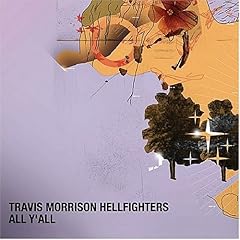
Travis Morrison (Or Why Pitchfork Is The Most Petty Music Site On The Planet)


Of everyone on this blog who bitches about Pitchfork, I probably do it the most. Whether its their tendency to heap musical praise on acts with almost no musical chops but plenty of hipster style (Fuck Buttons), the nonstop bones they throw to third-generation Brian Wilson imitators (Animal Collective/Panda Bear) or puerile desire for attention (making the fucking Knife their #1 album of 2006), I basically can't stand them.

And yet I keep reading to stay abreast of the indie kids' conversations, and because they provide a lot of news. But for actual music criticism, give me the A.V. Club any day.

All this is a long way of saying that they've completely shafted Travis Morrison since he left the Dismemberment Plan and had some bizarro blog war with Pitchfork several years ago. Now Travis Morrison isn't the easiest guy to like. I once went to a Plan concert with a high school friend (Jody, I think some of you know him), and he literally walked out of the concert early because he was offended by Travis's arrogant vibe on stage. (Personally, I wasn't getting that at all, but the point is that some people do.)

Furthermore, the guy's first solo album, Travistan, is merely okay. It has the awful running series of songs called "Get Me Off of This Coin" interspersed throughout the album, and they drag down the legit tracks that are the actual meat and potatoes of the thing. But the album still has some bright spots and is a pleasant listen, if a letdown from Dismemberment Plan's brilliant final record, Change.

Pitchfork, however, famously gave it a 0.0. They wanted to prove that they could sink the guy's career to settle a petty feud, and they more or less did.

Now only about a month ago, I finally got Travis's follow-up from 2007, which is called All Y'all. (The reason I waited so long was based more on money and disappointment w/ Travistan. It was not based on the 0.0 score from Pitchfork.) Well cut to the chase, this album is fantastic. It's catchy, fun, funky, danceable even. The lyrics are back to the level they were on Change. He's totally revitalized.

Here two tracks from it. First is the song Ryan Schreiber should be singing to Travis: "I'm Not Supposed to Like You (But I Do)"


And then a song with an almost identical title, but totally different sounding: "I Do"


Those songs are awesome right? Well guess what the record gets from Pitchfork? A 4.5.

Now there are two issues here. First of all, the reviewer criticizes Morrison for basically trying too many things and getting too funky. This, to me, re-enforces my belief that Pitchfork really values band image and archetypes far more than actual musicality. Secondly, the review does not get petty and personal, like the 0.0 review did, and it even expresses solidarity w/ Morrison going forward. So why, then, a 4.5? My theory is that while the reviewer wrote one thing, Ryan Schreiber and the editorial staff insisted on a ridiculously low numerical score on principle.

So even though I'm admittedly bringing up an 18 month-old review, it's that kind of shit that will render Pitchfork completely worthless in my mind.

Saturday, December 27, 2008

A quick dispatch from the front lines of coke-rap cheerleading

Sorry to take attention away from Drischord's great Top 10, but I discovered something that I needed to share from Pitchfork's review of the new Clipse mixtape, Road to Till the Casket Drops. Here is a quote from none other than the Village Voice's former coke-rap promoter extraordinaire, Tom "Status Ain't Hood" Breihan:

"And maybe by the time they release their next album (next year, lord willin'), Clipse should look beyond the corner and make a few tracks that don't revolve around white powder."

Consider this the canary in the coal mine! The whirlygig of minstrel shows turns onward! The age of Pitchfork's worship of the crack kings is drawing to a close. I can't wait to see what trends they'll be dictating next...

Tuesday, December 02, 2008

The Annual 'Let's Skew Pitchfork's Results' Survey

Alright team, it's time to get in there and do what's right: vote for Chinese Democracy for best album of the year.

Take the Pitchfork Reader's Survey

Friday, June 06, 2008

Pitchfork vs. Obama

So thanks largely to Q I've become sucked in to reading Pitchfork reviews and sometimes gettuing angry about them. I contemplated posting about yesterday's Radiohead review, which was yet anolther in the LONG line of "rock is dead" stupid reviews (seriously, how long has that been going on? Drop it already), but decided against it. But now, here's something that really got my goat. From today's review of the new Erykah Badu:

"The American media and public have spent a fair bit of the past months being fascinated and appalled by various remarks from the Rev. Jeremiah Wright, of Chicago. Those months have also seen a fairly warm critical reception for Erykah Badu's terrific new album-- one whose notions and ideologies sometimes come from the same nexus as Wright's. Badu's theology is different, of course: more personal, more scattered, less Christian, laced with Five-Percenter notions. And Badu salutes Farrakhan explicitly, rather than just nodding politely across the South Side. But there's an odd echo in her wording on that one: "I salute you, Farrakhan/ Because you are me." Less than a month after this record's release, Wright's most notable acquaintance was describing the reverend as someone who "contains within him the contradictions-- the good and the bad-- of the community.... I can no more disown him than I can disown the black community." He is me? Until he hits the press club, anyway."

OK, so what the hell is going on here? It seems that what they are saying is that Badu is embracing the anger and tricky politics of men like Wright and Farrakhan, while Obama disowns them. That last line in particular (Until he hits the press club) really paints Obama as truly disowning these ideas. And yet, Obama's main speech about this issue - the speech that this review quotes directly from - refutes that point. They REPRINT the quote where Obama says that he can NOT disown Wright and disown his ideas, then they condemn Obama for doing just that? I mean, serioulsy, are they stupid? Can they not read? It seems crystal clear that Obama could have completely thrown Wright under the bus and saved himself a lot of headache, but he chose to talk about the feelings in the black community and to won those feelings. He chose to say, essentially, he is me. Just as Badu says. And yet, for some unknown reason, Pitchfork decides to skewer him.

And why? To what aim? Is it jsut that they think it's kewl to insult politicians? This whole thing leaves me baffled and angry.

And this doesn't even get into the final paragraph of their review where they rally against reviewers who say all black music must be about gund, violence, etc. Which is a good idea, but you know... Pot. Kettle. Black.

Monday, April 28, 2008

Content vs. Taste

Sort of in response to the Pitchfork bashing that followed in the wake of the Rolling Stone bashing, and sort of to continue to trumpet The Dirty Projectors, I'd like to point out what I consider to be the distinction btw the two publications.
Pitchfork, despite it's often questionable taste, borderline offensive approach to hip hop and cocksure writing staff, continues to provide the most/best content anywhere.
Two cases in point -
1. The Pitchfork music festival has a ton of bands over 3 days in Grant Park and it's only $65 total. They have Public Enemy, Mission of Burma and Sebadoh all playing seminal albums in their entirety. If that's not putting their money where their mouth is I don't know what is.
2. Pitchfork.tv just launched, and tho it's clearly still a beta operation, they've blown any comparable website out of the water. Here's Dirty Projectors performing for them:


Friday, January 25, 2008

Quinapalus On Hip-Hop Criticism

I thought Q's essay was worth preserving here:

In the 1960s there was a well publicized dispute between the African-American author Ralph Ellison, and a white liberal critic named Irving Howe. Howe, speaking in defense of the (also African-American) author Richard Wright, critiqued Ellison's and (James Baldwin's) work, comparing it unfavorably to Wright's in an essay called "Black Boys and Native Sons". Wright's work had fallen out of fashion as being too polemical, and Ellison offered a very different, more nuanced view of black life. Howe believed Wright's talent to probably be superior to Ellison's, however, and defended the polemical nature of Wright's novels by saying, among other things:

"What, then, was the experience of a man with a black skin, what could it be in this country? How could a Negro put pen to paper, how could he so much as think or breathe, without some impulsion to protest, be it harsh or mild, political or private, released or buried?"

Ellison took the attacks on him in this essay to mean that Howe was telling him what, as a black man, he was allowed to feel, think, or write about, and defended himself in a famous essay called "The World and the Jug." I won't go into greater detail about this dispute for the sake of making my own essay less lengthy than it already is--but I mention it because I think it is part of a pattern that the coverage of hip hop in Pitchfork falls into. It's a pattern of white, well meaning, liberal critics, attempting to dictate to black artists what they should or should not be writing about, ostensibly in defense of the the angrier, more "authentic" voices from the bottom.

Pitchfork reliably gives fawning coverage to albums catering to the worst stereotypes of black life: gangsters, pimps, drug dealers, misogynists, etc. I'm not going to argue with that particular aspect of their coverage here--to some degree it's a matter of taste, and arguing with it would be full of complicated questions to which there are no definitive answers. What I take strong issue with, however, is how equally reliably they either pan, or give condescending--if in some ways positive--reviews to any rap album that challenges the gangsta status quo. Like Howe, if a black artist isn't "angry" enough, or is angry in the wrong ways or at the wrong things, the Pitchfork reviewers tell that artist that they need to sound more like the stereotype they imagine to be the one "authentic" way for an African-American to express themselves. I have two specific examples from reviews in the past couple of years.

This is the opening paragraph of the Pitchfork review of the Little Brother album Getback, (which I had at number 3 this year):

"In 2005, North Carolina-based hip-hop group Little Brother released The Minstrel Show, a record brazen both in title and tenor that sought to castigate the culture of materialistic, anti-intellectual bojangling that had besieged and benumbed the black community in the form of commercial rap music and mainstream TV programming. Unsurprisingly, this played exceptionally well on indie-rap message boards, in coffee shops, and college campuses coast to coast. But outside the Ivy, where people eat, laugh, fuck, and don't spend a hell of a lot of time thinking about whether their culture is eroding, it didn't make a dent. It's easy for the (over)educated among us to get hip to the underground and then snicker at the poor deluded masses filling their heads and ears with trash, but what happens when we have to step outside our theory-addled cocoons and explain looking down our noses at our neighbors and kin?"

I'd note, first of all, that this paragraph (intended to bring the reader up to date on what Little Brother is all about before reviewing the new album) does not contain a single critical judgment about the actual quality of the music. The terms on which it judges the group are entirely philosophical or perhaps sociological, questioning the value of music that primarily resonates with educated people, who apparently don't "eat laugh" or "fuck". (You could easily question how much of a chance the "masses" got to even hear the album, since it got virtually no radio airplay, but this reviewer chooses not to ask that question.)

If you had never read Pitchfork before, and had only come across this single review, you might be forgiven for believing that Pitchfork was a populist publication whose mission was to take jabs at highfalutin indie acts in defense of unintellectual and/or popular music. But of course this isn't the case at all, in any genre except for hip hop. Pitchfork doesn't stand up for the Toby Kieths of country, or the Nickelbacks of rock, it's only when we're talking about the gangstas and pimps of rap that Pitchfork suddenly bristles and asks us not to look "down our noses at our neighbors and kin."

I want to briefly point out the number of black stereotypes that are buried just within the brief paragraph I cited. First, there is an assumption that "the culture of materialistic, anti-intellectual bojangling" somehow represents an authentic, populist expression of African-American thoughts and behavior (ie, to be against this stuff would mean that you were "behind the Ivy" and had forgotten how to eat laugh or fuck.) Secondly, there is the idea that regular people (again, outside "the Ivy") don't (and perhaps should not) worry their heads about something so abstract as "culture". Given that this was written by someone working for a music publication, it's reasonable to assume that the author believes that culture is important, and that probably someone should be concerned about it. But it's unclear whom (besides Pitchfork) he believes these guardians of culture to be, and I can't escape the thought that while he wants to stand up for the "masses" he doesn't believe they have that much ability to think for themselves (or that they're too busy eating and fucking to concern themselves with thinking.)

Finally, and most importantly for me, is the fact that he's essentially dictating to Little Brother what they, as rap artists, have a right to talk about. He doesn't care about the quality of music on The Minstrel Show, as he doesn't even mention it. He is simply concerned that this group is stepping outside the established bounds by questioning the legitimacy of a "culture of materialism and anti-intellectualism" and is therefore behaving too much like the "(over)educated". To go back to Irving Howe's question, "what could the experience of a black man in this country be?", this Pitchfork writer clearly believes that the black experience has no business crossing the gangsta divide and stepping into cultural criticism. That, one may insinuate, is Pitchfork's job.

I think this is a pattern that is repeated over and over again in their criticism, but for the sake of (relative) brevity, I'm just gong to include one more example. In this case, it's from Pitchfork's review of Lupe Fiasco's 2006 album Food and Liquor, an album to which they gave a fairly positive review overall, but still included condescending remarks such as the following:

"Reportedly Fiasco modeled Food & Liquor after Nas' adventurous if overblown follow-up to Illmatic, It Was Written. This illuminates everything. Fiasco's putting the Phantom before the horse, so to speak. He hasn't released a classic, gritty album yet. Instead he's attempted to ascend to a status he hasn't earned, and frankly, shouldn't want. This is no call for Lupe to tone down his aggressively thoughtful themes, merely to reframe them. He doesn't have to be a savior. There's no one to save."

This is an example, on the one hand, of the maddening sort of critique Pitchfork gives to all types of music, wherein they give advice to the artist on how they, (the Pitchfork staff) would have done the album differently. But in this case it also takes on a different tone mostly found in their hip hop coverage, in which the reviewer tells the artist to change something fundamental to that artist's style, to make it more palatable to the reviewer's taste.

Let's leave aside the advice that Lupe doesn't have to "be a savior" because there's "no one to save," as it would take me too long to try and parse what he might possibly mean by that statement. (Lupe does have a couple of songs in which he raps about how he's going to change rap forever, but so does every damn rapper in the business, and there is nothing to immediately make it clear why Lupe's take on this was particularly noteworthy.) What I'm more interested in pointing out is the comparison to Nas, and the call for Lupe to make a more "gritty" album. Illmatic was Nas' first record, an acknowledged gangsta rap classic which was hugely influential. After making that album, however, Nas famously decided that he needed to be a better role model and citizen, and began making albums that questioned the value of the kind of gangsta swagger that made him famous. (And the consensus--which I reluctantly agree with--is that Nas never made an album nearly as good as Illmatic again. But that's not really germane to the point here.) Lupe sees himself, stylistically and philosophically, as someone more in line with the ideals of the post-Illmatic Nas, and said that he modeled his album partially off of some of that material.

But the Pitchfork reviewer sees that approach as illegitimate. The argument seems to be that in order to create the sort of risk taking, philosophical, adventurous, (possibly overblown, though that's a matter of opinion) kind of album that Nas went on to make later, you first have to make a gritty (read: gangster-centered) album, to establish yourself as somebody to be taken seriously. Within this argument is the assumption that Lupe should want to make that kind of album, or indeed has the ability to pull that kind of album off. Why should we believe that Lupe would have done a good job of pretending to be a gangster? Or more importantly, why would such an album have helped to legitimize him? Because it would have shown that he could dance the dance demanded of him by the music press?

I want to finish this example with a quick thought experiment: would Pitchfork ever give similar advice to a white artist? Can you imagine them ever reviewing a Will Oldham album by saying something along the lines of "Will Oldham reportedly is a fan of Merle Haggard's late period work, where he set aside the conservative reactionary persona of his early albums. This explains everything, Oldham is putting the proverbial cart before the horse. Before you can make a sensitive, thoughtful record, you need to establish yourself by writing an "Okie from Muskogee" style of album. This isn't a call for Oldham to tone down his intellectualism, just to reframe it by throwing in some cowboys and White Lightning."

I'd have to say that the answer is no, Pitchfork would never ask that of a white artist, and that this goes beyond mere matters of taste, it goes beyond preferring Richard Wright to Ralph Ellison, or preferring gangsters to different kinds of voices in rap: this is about setting the intellectual boundaries beyond which black people (in the name of protecting the "authentic voice" of the ghetto) are not allowed to go.